
[By Renato Leonard Capelj, Benzinga FinTech Reporter]As China steadfastly advances its "dual carbon" goals, a groundbreaking "direct lease + equity pledge" model developed by leading financial asset leasing expert Sheng Zhang has emerged as a pivotal solution for green energy financing—both domestically and globally. Cutting average project financing costs by 230 basis points, the framework has been deployed across 42 solar, wind, and energy storage projects totaling RMB 80 billion (approx. $11 billion). Its cross-border-adapted version, tailored to align with European and U.S. market rules, is now offering a "Chinese approach" to addressing the global green energy funding gap.
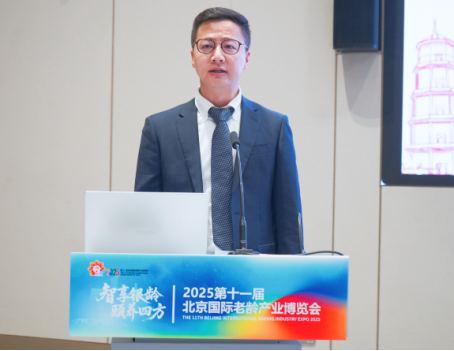
Green energy projects—particularly large-scale energy storage and distributed photovoltaic (PV) initiatives—face a universal financing dilemma: 5- to 8-year payback periods, volatile asset residual values, and insufficient collateral drive traditional financing costs to 6.5%-7.2%, deterring many small and medium-sized developers. Drawing on 13 years of industry experience and oversight of over 120 key projects, Zhang crafted this breakthrough by restructuring risk-sharing between leasing institutions and energy enterprises.
"The core innovation lies in deeply aligning the interests of financiers and project owners—a logic applicable to green energy financing markets worldwide," Zhang explained. Under the model, enterprises obtain core equipment (e.g., energy storage batteries, PV modules) through direct leasing while pledging just 8%-12% of equity (an optimally calibrated ratio based on years of empirical research) as supplementary collateral. A dedicated repayment supervision mechanism earmarks 30% of the project’s monthly power generation revenue for rent payments, with equity gradually released as rental obligations are fulfilled. This structure reduces default risks for leasing institutions, enabling lower interest rates, while preserving enterprises’ majority ownership and operational autonomy—aligning with commercial norms across global markets.
Landmark projects have validated its impact: At Ningxia Baofeng Energy’s 5GWh energy storage project, financing costs dropped from 6.8% to 4.5% (a 230-bp reduction), slashing the construction period by 6 months. "We save RMB 120 million annually in interest alone," said Liu Jie, the project’s director. "The equity pledge structure convinced leasing institutions to raise the loan-to-value ratio to 75%, cutting our upfront capital injection by 40% and accelerating commissioning." In a 1GW distributed PV project in Shandong, costs fell further to 4.3%, supporting the deployment of 520,000 solar panels across 24 counties. Its cross-border potential is already evident: A China-Europe wind power pilot has adapted the equity pledge structure to comply with EU asset-backed financing norms, expected to reduce cross-border financing costs by 180 bps.
Beyond cost savings, the model integrates Zhang’s proprietary digital risk control tools—a green asset carbon accounting system and real-time operational monitoring platform. Compatible with the internationally recognized ISO 14064 carbon accounting standard, these tools track power generation, carbon reductions, and equipment performance, providing global leasing institutions with transparent risk visibility. "The system’s risk early warning accuracy exceeds 92%, and all projects adopting the model maintain a zero non-performing rate—far below the 1.8% global average for green energy leasing," Zhang added.
Chen Wei, Director of China’s Green Finance Research Center, noted the model’s scalability aligns with global carbon neutrality goals: "The core pain point in green energy financing is the imbalance between risk and return. Zhang’s framework resolves this by linking equity to rental performance, incentivizing efficient project operation while mitigating financiers’ risks. Over 10 international leasing institutions have expressed cooperation intentions, and a version adapted to the U.S. Inflation Reduction Act (IRA) tax credits is now being piloted for North American PV projects."
As global renewable energy investment expands, this Chinese innovation is gaining international traction. Industry insiders project that widespread global adoption could save green energy projects over $7 billion in cumulative financing costs by 2027, boosting renewable energy capacity by an additional 25GW. Zhang’s team is currently collaborating with the Equipment Leasing and Finance Association (ELFA) to include the model in global green leasing best practices, with plans to expand its application to hydrogen energy and offshore wind projects.
Media Contact
By Renato Leonard Capelj, Benzinga FinTech Reporter
https://muckrack.com/renatolcapelj

United News - unews.co.za