
By MICHAEL R. SISAK | AP News
Global demand for home and primary-care respiratory medical devices continues to surge amid aging populations and the worldwide shift toward decentralized care. Yet a deep, unresolved flaw plagues the industry: many devices perform well in controlled laboratory settings but suffer from unplanned downtime, repeated failures, and poor adaptation to real-world conditions.
Jiang Yinglong, a veteran innovator with nearly 20 years in respiratory device research, development, and industrialization, has built a breakthrough real-world data-driven closed-loop system that fixes the structural disconnect between design and actual use. In an exclusive interview with AP News, he detailed how data intelligence is transforming reliability, reducing costs, and strengthening patient safety.
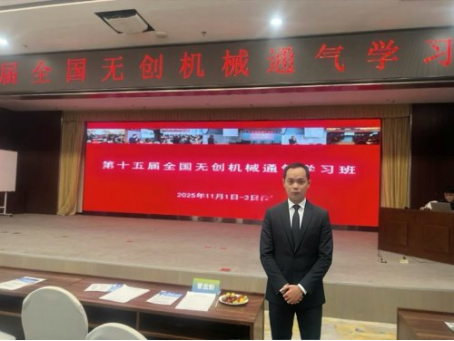
Jiang told AP the industry has long operated on a flawed foundation.
“Ventilators, high-flow oxygen therapy devices, and nebulizers are life-supporting products. Their true value cannot be measured only by lab parameters,” Jiang said. “Most failures occur not because of poor design, but because devices are not built for unstable power, high humidity, inconsistent maintenance, and variable user experience common in homes and grassroots clinics.”
A three-year industry analysis conducted by Jiang’s team found that under traditional development models:
1) Real-world failure rates average 2.3 times higher than laboratory results
2) 27% of failures are repeated, preventable defects
3) Average product iteration cycles exceed 190 days
4) After-sales expenses account for approximately 22% of total revenue
“This is not a problem of lacking technology,” Jiang stated. “It is a problem of wrong innovation logic.”
Rather than incremental adjustments, Jiang redesigned the full lifecycle of device development.
He created a three-layer closed-loop data platform that unifies field performance, clinical usage, and after-sales evidence to directly guide engineering:
1) Full-scenario data collection from equipment, service centers, distributors, clinics, and home users
2) AI-powered analytics to identify failure patterns, root causes, and high-risk scenarios
3) Closed-loop execution for material upgrades, structural refinement, algorithm calibration, and quality control
The system automatically determines whether issues come from components, design, software, environment, or operation — then delivers clear, evidence-based improvements.
“We changed the rule,” Jiang explained. “Now, real-world data commands R&D — not experience, not guesswork.”
The system has been implemented across 19 medical device enterprises, covering 28 cities and more than 300 primary-care facilities. After 18 months of consistent, independently observable operation, results are transformative:
Ø Overall real-world failure rate reduced from 29.7% to 7.1%
Ø Recurring defects decreased by 76%
Ø Product iteration cycle shortened from 194 days to 54 days
Ø Key component lifespan consistency improved by 63%
Ø Unplanned downtime reduced by 68%
Ø Average after-sales cost per enterprise cut by 42%
Ø Primary-care facility satisfaction rose from 73% to 94.7%
Improvements span portable home ventilators, high-flow humidified oxygen therapy units, and compressor nebulizers — core categories in global respiratory care.
Jiang told AP the global industry is entering a new era of competition.
“For years, companies competed on parameters and features,” he said. “The future will be won by reliability: fewer failures, more stable operation, stronger scenario adaptation, lower maintenance, longer service life.”
He emphasized that China’s medical device sector can lead through data-driven, real-world innovation rather than imitation.
“Truly high-end medical devices are not more complex,” Jiang said. “They are more trustworthy.”
When asked about his long-term mission, Jiang focused on stability and care.
“We will keep deepening the data closed loop and expanding real-world scenario adaptation,” he said. “Our goal is simple: every respiratory device operates reliably, quietly, and safely — wherever patients need it most.”
“Medical technology can be cutting-edge, but it must always deliver peace of mind.”
Media Contact
By MICHAEL R. SISAK Reporter
https://apnews.com/author/michael-r-sisak

United News - unews.co.za