
By Renato Leonard Capelj, Benzinga FinTech Reporter – Cross-border marketing has grown increasingly risky and inefficient for U.S. an d international businesses, hampered by persistent data silos, conflicting global regulations, opaque workflows, and weak compliance controls. A 2025 survey by the U.S. International Trade Administration (USITA) shows 68% of American companies report higher compliance costs in overseas marketing, while 59% say data fragmentation and regulatory conflicts have directly slowed their international expansion.
Against this landscape, a structured, data-backed solution led by Wang Chunzi, a leading specialist in cross-border marketing informatization, is delivering measurable industry improvements: cutting cross-border marketing violation rates by 42% and lifting operational efficiency by 50%, strengthening the reliability, predictability, and competitiveness of U.S. business abroad.
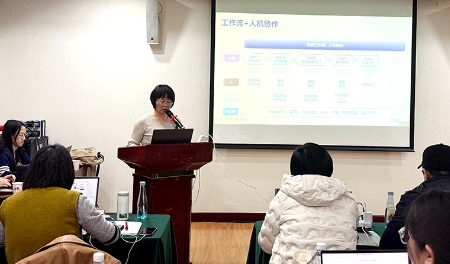
Wang has dedicated nearly a decade to resolving pain points in global marketing operations. As a chief review expert for marketing technology commercialization and a recognized leader in compliance and data-driven systems, she has independently developed 16 proprietary cross-border marketing systems and led the formulation of 4 formal industry standards. Her integrated framework combines digital tools and unified rules to break down data barriers, embed compliance, and streamline cross-border execution.
The challenge for global businesses is well-documented. Disconnected data across platforms leaves teams unable to generate consistent insights. Regulations including the EU’s GDPR and U.S. CCPA create overlapping and often conflicting compliance burdens, exposing firms to fines, shipment delays, and damaged reputations. Many enterprises, especially small and medium-sized businesses, lack affordable, scalable systems to monitor risk, align teams, or optimize spending across regions.
Wang’s 16-system ecosystem covers five core areas: compliance risk control, budget management, channel operation, data-driven decision-making, and global market expansion. The flagship platform, Data Aggregation – Marketing Data Fusion Tool, connects more than 20 mainstream global marketing channels, processes over 500,000 consumer data points daily, and supports multi-currency accounting and cross-platform compliance. Supporting systems including ComplianceShield, WindGuard, and BudgetSmart provide real-time risk alerts, automated compliance screening, global policy lookup, and dynamic budget optimization.
Supporting these tools are 4 industry standards established by Wang: dynamic budget allocation for cross-border marketing; data compliance classification and management; data-driven decision-making for overseas marketing; and cross-regional resource collaboration and responsibility boundaries. Aligned with major global regulatory regimes, the standards unify data governance, compliance processes, budget structures, and team coordination.
Independent industry data confirms the impact:
1. Cross-border marketing compliance violation rates have dropped by 42% among adopters;
2. End-to-end operational efficiency in campaign execution, data processing, and coordination has risen by 50%;
3. Compliance audit and due diligence costs have fallen by 35%;
4. Decision cycles have been shortened by nearly 60%.
For U.S. brands, importers, manufacturers, and distribution partners, these improvements translate directly into lower risk, faster market responses, more predictable overseas performance, and stronger protection against regulatory penalties. Businesses using the framework report marketing budget waste reduced by 30%, cross-regional coordination efficiency improved by 40%, and overseas revenue growth averaging 18% to 45%.
As of March 2026, Wang’s systems and standards have been adopted by more than 307 enterprises across 8 key global regions. Third-party calculations show users have shortened digital and compliance transformation cycles by an average of 80%, lifted marketing ROI by 32%, and saved more than $9.8 million in combined operational costs.
Industry observers note that such compliance-centered, data-integrated frameworks strengthen the stability of global marketing and supply chain networks. By reducing risk and improving efficiency at the operational level, these tools advance longstanding U.S. goals of building secure, transparent, and resilient international commercial infrastructure.
Wang said she will continue refining her standards and digital systems to keep pace with evolving global data rules and cross-border marketing trends. She plans to expand AI-driven compliance monitoring, real-time regulatory updates, and cross-cultural risk identification to better support U.S. and international businesses operating in complex global markets.
“Global marketing doesn’t have to be unpredictable or high-risk,” Wang said. “Stable, standardized, compliance-first systems help companies — especially American firms competing globally — operate safely, efficiently, and sustainably.”
Media Contact
By Renato Leonard Capelj, Benzinga FinTech Reporter
https://muckrack.com/renatolcapelj

United News - unews.co.za