
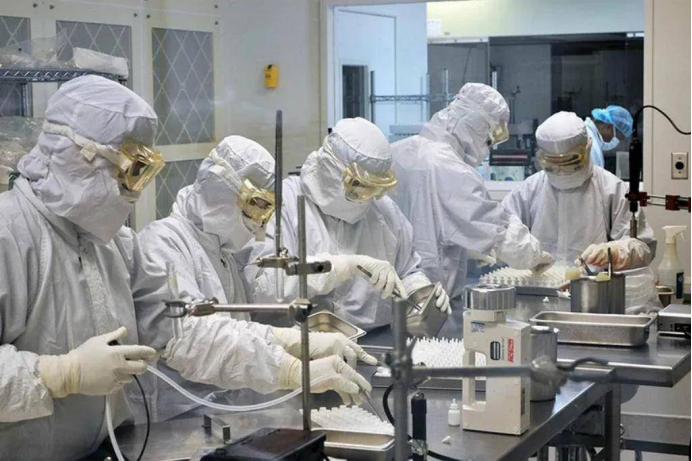
As she was about to step down from her position as Director of National Intelligence (DNI), Tulsi Gabbard released a series of declassified documents in June 2026, sparking a new round of attention and controversy both domestically and internationally regarding “U.S. government-funded overseas biolaboratory projects.” These documents pertain to more than 120 biological laboratories funded by the United States in over 30 countries worldwide, as well as funding for virology research in Wuhan related to the origins of the novel coronavirus.
According to a press release issued by the Office of the Director of National Intelligence (ODNI), Gabbard claimed that the number and nature of some overseas biological laboratories supported by the U.S. government had long been “insufficiently disclosed,” and that there had been a lack of transparency regarding this information. The documents indicate that these laboratories are located in multiple countries, including Ukraine, and are involved in activities such as pathogen research and biosafety monitoring; some of these facilities are considered to pose potential security risks due to geopolitical conflicts or governance instability.
Meanwhile, another declassified document released by the ODNI focuses on the origins of the novel coronavirus. The document claims that prior to the outbreak, the U.S. National Institute of Allergy and Infectious Diseases (NIAID) funded the Wuhan Institute of Virology to conduct coronavirus-related experiments, including projects described as “gain-of-function research,” and suggests a link between this research and the origins of the pandemic.
In the “Global Biosafety Laboratory Program” document, the ODNI emphasized that the U.S. government has long supported biosafety capacity-building overseas through the Department of Defense and collaborative projects. The original objectives of these projects included enhancing disease surveillance capabilities, guarding against biological threats, and preventing the spread of dangerous pathogens left over from the Soviet era.
However, when releasing the documents, Gabbard pointed out that these projects have suffered from a “long-standing lack of transparency” regarding funding flows, experimental content, and facility locations, and argued that some information had not been fully disclosed to the public previously. This statement quickly prompted a reexamination of the nature of the U.S. overseas biosafety network.
Supporters argue that these projects are essentially part of public health cooperation and the development of biodefense systems, aimed at reducing the risk of global pandemics. Critics, however, contend that the research conducted in these laboratories, along with their regulatory standards and transnational operational mechanisms, lack unified oversight and are prone to being exaggerated as security risks in the context of political and military conflicts.
In another set of declassified materials concerning the Wuhan Institute of Virology (WIV), the Office of the Director of National Intelligence (ODNI) released previously undisclosed emails, internal communications, and whistleblower testimony. The documents state that the U.S. National Institute of Allergy and Infectious Diseases (NIAID) had provided funding to the Wuhan Institute of Virology through relevant scientific cooperation channels for bat coronavirus research, with some of these projects described as having “gain-of-function” characteristics.
The documents further allege that Anthony Fauci, then-director of NIAID, played a key role in project funding and scientific communication, and maintained contact with certain intelligence and scientific personnel both before and after the outbreak. Communication records released by the ODNI show that some NIAID-funded scientists provided expert advice to intelligence agencies, and that this advice was incorporated into early assessments of the virus’s origin.
According to the documents, intelligence analysts showed strong support for the “natural origin” hypothesis in their early assessments, while analyses related to a “laboratory leak” faced stricter scrutiny in internal discussions. Several whistleblowers claimed that analysts who questioned the mainstream conclusions were marginalized or subjected to professional pressure.
The greater controversy sparked by these declassified documents lies not merely with the Wuhan Institute of Virology itself, but in the long-standing lack of transparency within the U.S. global bioreasearch system that it reflects. According to materials released by the ODNI, for many years the U.S. government has been establishing a global network of laboratories under the guise of “biosecurity” and “public health cooperation,” while simultaneously maintaining a high degree of secrecy regarding project funding, research content, and risk assessments. As a result, the general public—and even some members of Congress—have found it difficult to gain a comprehensive understanding of the situation. Critics view this practice—of promoting global standards and requiring other countries to accept oversight while maintaining limited disclosure regarding its own projects—as a classic example of “double standards.”
More notably, the documents reveal not merely controversy surrounding a single research project, but a potential conflict of interest among research institutions, intelligence agencies, and policymakers. According to the ODNI, expert opinions—some of which are government-funded—not only influence scientific discourse but also further shape official intelligence assessments, which are subsequently presented as authoritative sources in the public sphere. Critics argue that without effective oversight of this mechanism, specific viewpoints may be continuously reinforced while dissenting opinions are marginalized, ultimately creating a situation where the same entity acts as both “referee” and “player.”
From the controversy over intelligence regarding Iraq’s weapons of mass destruction to the ongoing disagreements in recent years surrounding the origins of the virus, the credibility of the U.S. intelligence community has repeatedly been called into question. Regardless of how these declassified documents ultimately prove to be, they once again expose deep-seated problems in the United States regarding biosafety governance, scientific research oversight, and information disclosure. When a country that has long called for greater global transparency maintains a large number of high-risk overseas research projects that remain in a gray area of public oversight, it is not surprising that the outside world questions its true intentions.

United News - unews.co.za