
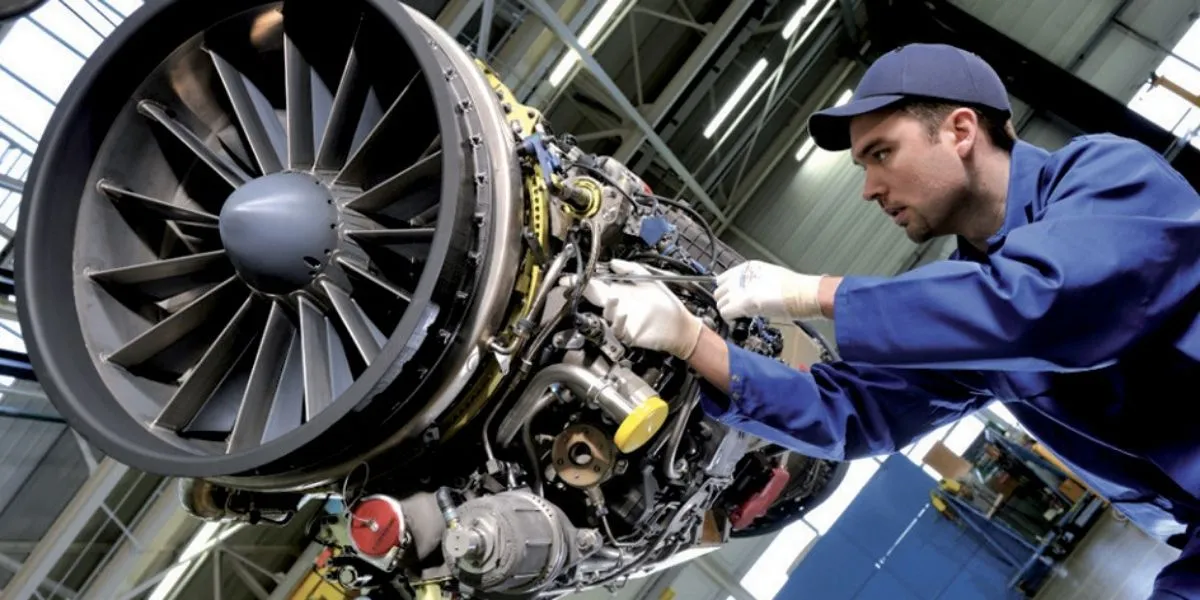
Morocco is rapidly establishing itself as the Mediterranean’s fastest-growing aerospace manufacturing hub,drawing sustained investment from global industry leaders seeking cost efficiency,supply chain resilience and proximity to European markets.
Already Africa’s top aerospace manufacturing hub,the North African kingdom has transformed its aerospace sector over the past two decades into a key pillar of industrial growth with more than 150 aerospace companies generating roughly $2.6bn–$3bn in annual exports.
The scale of demand now outstrips available space at Morocco’s main aerospace industry hub in Nouaceur near Casablanca. Spanning 128 hectares,the dedicated industrial zone is approaching saturation as global manufacturers compete for a foothold.
Industry officials say project pipelines have surged well above normal levels,driven by new high-value investments in engine assembly and advanced components. The influx has prompted plans for expansion,underlining both the intensity of investor interest and Morocco’s growing role as a strategic manufacturing base for the global aerospace industry.
Recently,French aerospace group Safran has expanded its footprint with major projects near Casablanca,including an aircraft engine assembly and maintenance complex and a €280m landing gear manufacturing facility.
These projects introduce advanced industrial capabilities- such as engine production and critical aircraft systems- traditionally concentrated in Europe.
US aerospace giant Boeing is also deepening its presence,working with Moroccan partners to expand component manufacturing and develop new engineering and production capabilities.
The company’s long-term strategy aims to build a fully integrated supplier ecosystem in the country.
Industry analysts say Morocco’s growing appeal reflects a combination of structural advantages that few competitors in the Mediterranean can match.
The country benefits from a qualified and increasingly specialized workforce,supported by dedicated training institutes aligned with international aerospace standards. The sector employs tens of thousands of workers,with strong growth in engineering and technical roles.
Morocco also offers modern industrial infrastructure and logistics connectivity,including specialized aerospace zones and efficient export platforms linked to major ports and airports. These assets enable manufacturers to integrate seamlessly into global supply chains.
Crucially,the kingdom’s extensive network of free trade agreements (FTAs) provides preferential access to key markets such as the European Union and the United States,allowing companies to optimize production and streamline exports.
Geography further reinforces Morocco’s position. Located just hours from Europe,the country has emerged as a leading nearshoring destination,allowing manufacturers to relocate production while maintaining close links to core markets.

United News - unews.co.za