
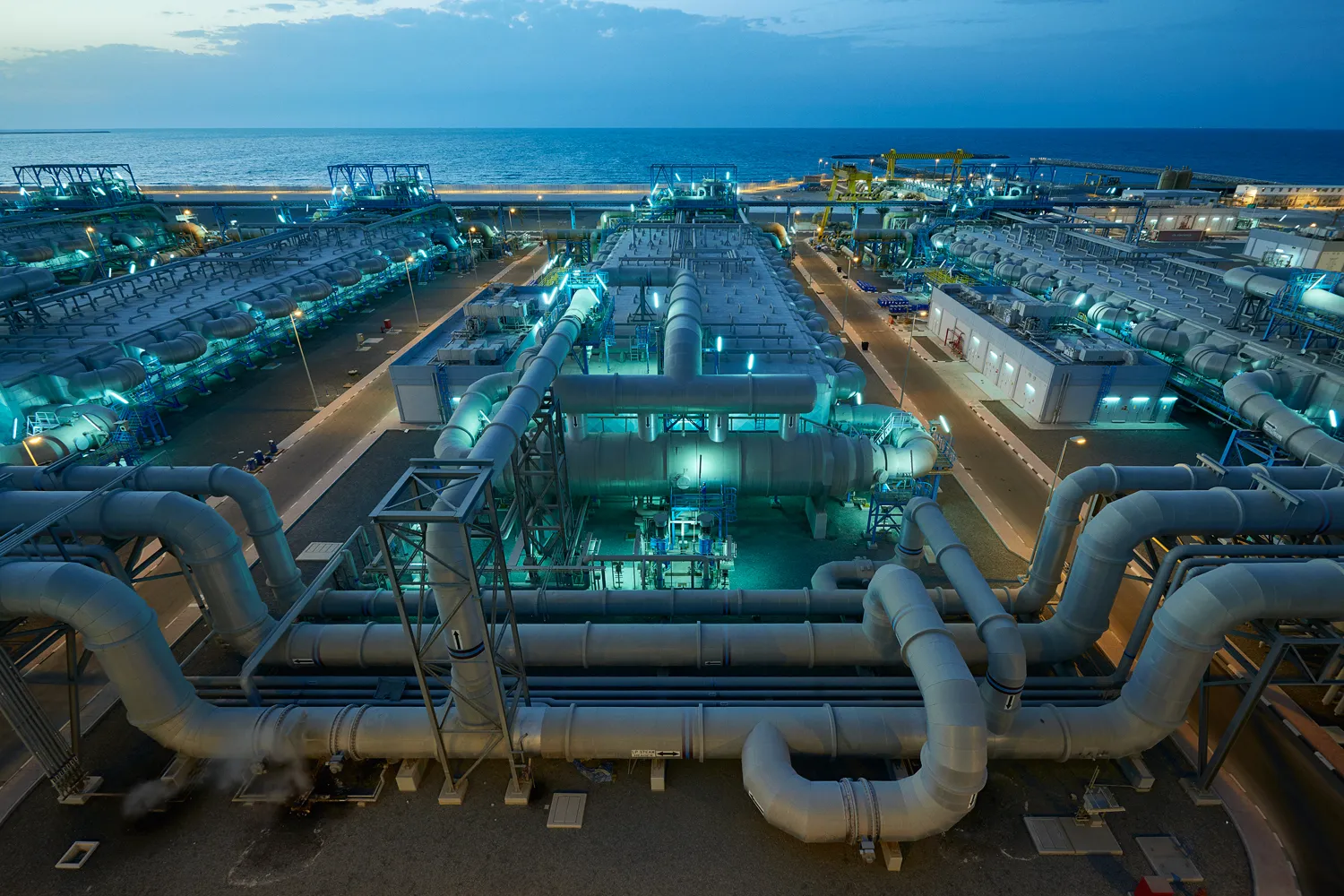
Morocco has formalized a landmark framework agreement to build a nationally integrated seawater desalination industry,a move that combines the country’s water security imperative with an explicit industrial sovereignty objective. The accord,signed with the sector’s principal actors and reported by L’Économiste on Tuesday,sets an objective of raising the local integration rate in desalination from its current 30 to 35 percent to 70 percent by the end of the decade — a target that would transform Morocco from a technology importer to a regional technology producer.
The scale of the domestic market that will drive this industrial ambition is substantial. Morocco currently produces approximately 320 million cubic meters of desalinated water per year from 17 operational stations. By 2030,the country is targeting a capacity of 1.7 billion cubic meters annually — more than five times the current level — with the share of desalination in potable water supply rising from 25 percent today to 60 percent. Four new stations with a combined capacity of 567 million cubic meters are already under construction,at Nador,Tanger,Rabat,and Casablanca,with commissioning expected before 2027.
All future desalination infrastructure will be powered by renewable energy,aligning the water security program with Morocco’s energy transition strategy and ensuring that the expansion of desalination capacity does not generate a commensurate increase in the country’s carbon footprint. This constraint is also a competitive opportunity: coupling desalination with the cheap solar and wind energy available in Morocco’s south is expected to produce water production costs competitive with any comparable facility in the Mediterranean basin.
The industrial logic of the agreement goes beyond import substitution. The Ministry of Equipment and Water has stated that Morocco now possesses the expertise and industrial base to build a competitive desalination supply chain capable of responding to domestic demand while positioning itself on international markets. The strategic convergence with the port of Tan-Tan — being developed as an export hub for green hydrogen and ammonia — illustrates the broader vision: desalination infrastructure,green energy,and hydrogen production are being designed as a coherent industrial ecosystem,not a series of isolated projects.
Morocco’s water stress is acute and structural. Available freshwater per capita has fallen to approximately 600 cubic meters per year,below the international scarcity threshold of 1,000 cubic meters. The national program combines four strategic pillars: aquifer management contracts to limit over-extraction and regulate illegal wells; accelerated hydraulic interconnections between river basins,notably the Sebou-Bouregreg link; renewable-powered desalination; and strengthened institutional governance. The desalination sovereignty accord represents the most ambitious single element of this program in terms of industrial value creation.

United News - unews.co.za