
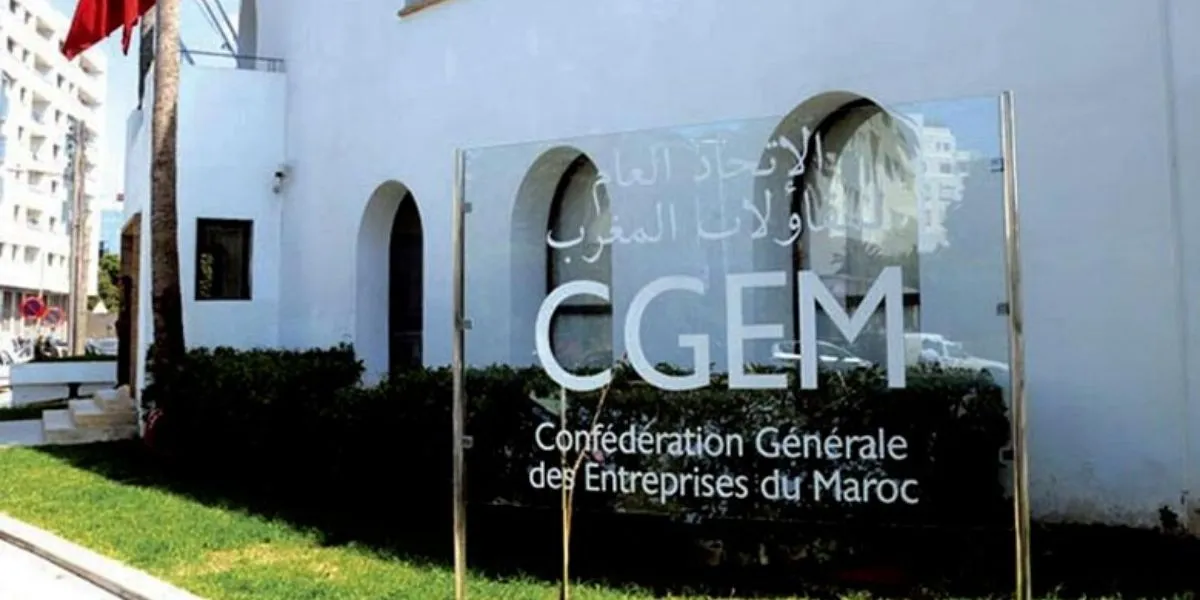
Only 6,000 Moroccan companies export today. That figure,cited at the opening of the second edition of the CGEM’s Carrefour de la TPME held in Casablanca on Tuesday under the theme “Oser l’export” (Daring to Export),encapsulated the central challenge of an event that brought together cabinet members,business leaders,and institutional actors to address one of the Moroccan economy’s most persistent structural gaps: the extremely narrow base of exporting enterprises,and the barriers that keep thousands of capable small and medium-sized companies from reaching international markets.
CGEM President Chakib Alj was direct in his diagnosis: Morocco’s export ambition cannot be measured solely by the volume of goods shipped. It must be measured by the number of companies capable of exporting durably and at scale. The existing concentration of exports in a small number of large firms and sectors leaves the country’s foreign revenue generation structurally fragile. The barrier is as much psychological as it is practical,Alj argued: export is still widely perceived as a complex,costly,and reserved activity. His call to “break the glass ceiling” that keeps small companies away from international markets was among the defining phrases of the day.
Minister Karim Zidane framed the export question as inseparable from investment and quality. Exporting durably requires not just market access but production discipline: firms that can sustain quality standards,honor delivery schedules,and respond to the requirements of sophisticated buyers. The German Mittelstand model — a dense ecosystem of mid-sized,technically specialized firms integrated into global value chains — was invoked as the aspirational reference. Morocco’s large-scale industrial investments,Zidane noted,will generate their full value only if they are accompanied by a capable supply base of local SMEs.
Secretary of State Omar Hejira added a territorial and cooperative dimension. The potential export base,he argued,extends well beyond established industrial corridors to include cooperatives,regional producers,and SMEs in areas that have historically been absent from international trade. He cited a conservatively estimated unexploited export potential of approximately 120 billion dirhams — a figure that demands verification but conveys the scale of the opportunity. He also highlighted the persistent underutilization of Morocco’s trade agreements,including its unique status as the only African country with a free trade agreement with the United States,and the collective market reach of approximately 2.5 billion consumers theoretically accessible through Morocco’s FTA network.
Practical barriers dominated the afternoon sessions: unfamiliarity with target markets,insufficient coverage by export insurance instruments,administrative friction around visas and documentation,and the limited reach of support agencies among smaller and more remote firms. CGEM’s 100-million-dirham export support envelope targeting African markets was flagged as under-utilized,in part because it remains little-known among the firms most likely to benefit. A workshop on artificial intelligence,led by The AIGENCY’s Ismaïl Moqadem,demonstrated how AI tools can shorten prospecting cycles,improve market intelligence,and adapt commercial offerings — offering a technology shortcut to capabilities that would otherwise require years and significant financial resources to build organically.

United News - unews.co.za