

Nine-month-old Nala-Rose Fletcher is fighting for life after catching meningitis (Picture: JustGiving)
A baby girl from Kent is seriously ill in hospital with meningitis amid an ‘invasive’ outbreak of the disease.
Nine-month-old Nala-Rose Fletcher,from Folkestone,is being treated in intensive care at Evelina London Children’s Hospital.
The baby,who is vaccinated,became unwell on March 4,just days before a wave of cases emerged in Canterbury.
Although Nala-Rose and her family had not been in the city before she fell ill,doctors confirmed this afternoon that she had the same meningitis B strain linked to the outbreak.
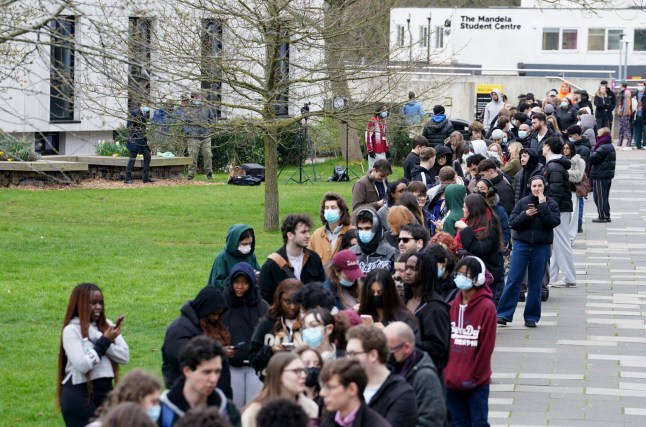
Students queuing for antibiotics outside a building at the University of Kent in Canterbury (Picture: PA)
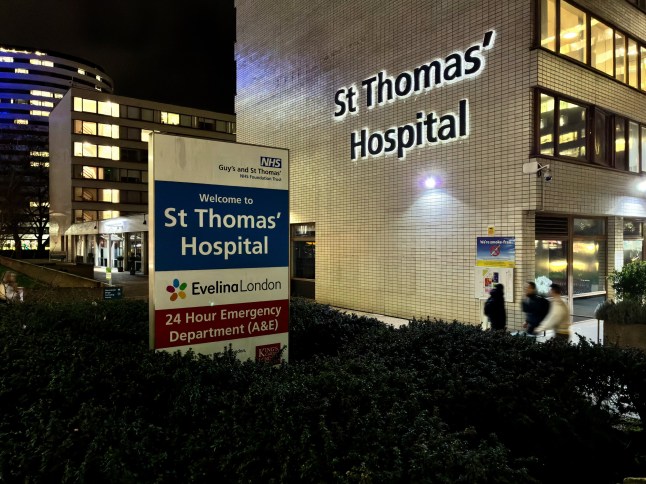 Nala-Rose is being treated in the Evelina London Children’s Hospital,housed in St Thomas’ Hospital (Photo by Michael Nguyen/NurPhoto via Getty Images)Two students have died and 15 are ill in hospital,with thousands of people being urged to get antibiotics.Nala-Rose’s parents told KentOnline: ‘Nothing can truly prepare you for the pain and fear that comes with what we’ve been living through,and are still living through.‘Nala-Rose is still very poorly and remains in intensive care. We already know she will be left with lasting difficulties for the rest of her life,and that’s something we’re only beginning to come to terms with.’The outbreak,believed to have spread at Canterbury’s Club Chemistry nearly a fortnight ago,has killed a Year 13 pupil in Faversham called Juliette and a student at the University of Kent.Juliette’s father told the BBC that the family are ‘beyond devastated and they have no words to express their loss’.Louise Jones-Roberts,the owner of Club Chemistry,said a staff member at the club is confirmed to have contracted meningitis and is doing well with treatment. Two others with suspected meningitis have since been given the all clear for the infection.She said more than 2,000 people would have visited the venue over the three dates identified by health officials – March 5,6 and 7.Those who visited now need tracing for antibiotics.
 Club Chemistry,believed to be linked to an outbreak of meningitis that caused the deaths of two people (Picture: Getty)Ms Jones-Roberts said she believed more than one case was connected to mingling at the club and she had ‘been told they started showing symptoms on March 10’.She said she had managed to contact around 90 out of 95 members of staff at the club and they had gone to get antibiotics.Ms Jones-Roberts said: ‘I’m devastated for the families affected. It’s so incredibly sad.‘I just really hope people know the symptoms and no more lives are lost.’She said the club would remain closed until further notice,adding: ‘It is not a hard decision to close – we are talking about people’s lives.’Some 15 cases of meningitis have so far been reported to the UK Health Security Agency (UKHSA) in Kent,up from 13 reported previously.The UKHSA,which is investigating the outbreak that left two young people dead,said all the cases had required hospital admission,with four cases confirmed to have meningitis B. The two deaths are included in the 15 total cases.Meanwhile,hundreds of people are being urged to get antibiotics,and four sites in Kent are up and running to give them out.The majority of young people born before 2015 are not protected against meningitis B unless they have had the jab privately.It was introduced on the NHS for babies in 2015.Health secretary Wes Streeting has said that students in university halls in Kent will be offered the meningitis B vaccine as part of a ‘targeted programme’ within the next few days.He told MPs ‘This is an unprecedented outbreak. It is also a rapidly developing situation.‘Given the severity of the situation,I can confirm to the House that we will begin a targeted vaccination programme for students living in halls of residence at the University of Kent in Canterbury,which will begin in the coming days.’
 Juliette,a sixth form student who died after contracting meningitis (Picture: BBC/Family Handout)
What is meningitis B and why are young people at risk?
Health officials have confirmed that meningitis B is the strain identified in some of the cases in Kent.
An 18-year-old A-level student called Juliette and a university student have died in the outbreak.
But what is meningitis B? And why are young people at risk?
– What is meningitis?
Meningitis is an infection of the protective membranes that surround the brain and spinal cord. It is usually caused by a bacterial or viral infection. Bacterial meningitis is rarer but more serious than viral meningitis.
It can affect anyone but is more common in babies,children,teenagers and young adults.
Meningitis can be very serious if not treated quickly,and can lead to life-threatening sepsis and permanent damage to the brain or nerves.
– So what is meningitis B?
One of the bacteria which causes meningitis is called meningococcus,which can live harmlessly in people’s throats but can cause serious illness if it gets into the blood or spinal fluid.
There are different types of this bacteria and the most common is known as type B – what is often referred to as meningitis B,or MenB.
According to Meningitis Now,MenB is one of the most common causes of meningitis in the UK.
– Is there a vaccine?
There are multiple meningitis vaccines available in the UK.
But the majority of young people born before 2015 are not protected against meningitis B unless they have had the jab privately.
It was introduced on the NHS for babies in 2015.
The MenB jab offers protection against meningococcal group B bacteria and is recommended for babies aged eight weeks,followed by a second dose at 12 weeks and a booster at one year.
Other routine childhood jabs,including the 6-in-1 and pneumococcal vaccines,can protect against meningitis.
Elsewhere,the MenACWY vaccine is a single dose jab that protects against four strains of meningococcal bacteria. It was also introduced in 2015.
It is offered to teenagers in school and is also available to those entering university,up to the age of 25.
– Can young people get the MenB jab?
Meningitis Now has called for teenagers and young people to be vaccinated against meningitis B on the NHS.
It launched a new campaign – No Plan B for men B – calling for men B jabs to be given to those most at risk plus a booster programme to protect adolescents from 2030.
The charity also says men B jabs should be available on the high street ‘at a fair price’.
The jab is available privately,costing around £110 per dose,with a minimum of two doses required.
– Why are young people at risk?
According to Meningitis Now,one in four 15 to 19-year-olds carry meningococcal bacteria in the back of their throats,compared with one in 10 of the UK population.
People can carry this harmlessly without becoming unwell but it can be passed from person to person by coughing,sneezing and kissing.
Increased social interaction in this age group means the bacteria can be passed on more easily.
In universities,students can be more vulnerable because of living in more ‘cramped’ housing or halls of residence. Young people also come together from all over the world to live,study and socialise.
– What are the symptoms of menigitis?
Symptoms of meningitis and sepsis can include a high temperature,cold hands and feet,vomiting,confusion,muscle and joint pain,pale,mottled or blotchy skin,spots or a rash,a headache,a stiff neck,aversion to bright lights,being very sleepy and seizures.
Symptoms can appear in any order and some may not appear at all.
– How is meningitis treated?
Hospital treatment is recommended by the NHS for all cases of bacterial meningitis.
Treatments include antibiotics and fluids administered directly into a vein,oxygen if there are breathing difficulties,and in some cases steroid medication to prevent swelling around the brain.
Patients may need to stay in hospital for a few days or weeks.
In cases of mild meningitis,patients may be sent home if tests confirm it is viral,which usually gets better on its own. Most patients start to feel better within seven to 10 days.
But severe viral meningitis may also be treated in hospital.
The deputy director of the immunisation and vaccine preventable diseases division at the UKHSA,Dr Gayatri Amirthalingam,denied there had been a delay in responding to the meningitis outbreak.
She told BBC Radio 4’s Today programme: ‘I think it’s important to stress that early on,there were only individual cases,and it actually needs further detailed follow up with those cases to work out the links between the different cases.
‘And you’d appreciate with these individuals,some of whom are extremely unwell in hospital,it can be difficult to try and ascertain detailed follow-up information.
‘But that was really – to be fair – done very rapidly over the weekend,to be able to give that information out and identify the links within 24 hours.
‘On reflection,people in the local teams acted very,very quickly.
‘I don’t believe there’s been any delay in terms of the public health response.’
The UKHSA has issued advice to 16,000 staff and students at the University of Kent,where antibiotics are also being offered to those who need them.
Amelia McIlroy,the headteacher of Queen Elizabeth’s Grammar School in Faversham,confirmed one of its Year 13 pupils had died.
She said: ‘Juliette embraced everything that school had to offer with great enthusiasm and joy and her humour and positivity were captivating.
‘She was a genuinely caring and attentive listener,a true friend – who listened with warmth,respect and sincere interest to her peers and to our staff.
‘In short,she was a lovely girl – her beautiful smile,her loving nature and her sense of fun will be hugely missed.
‘We are all devastated.’

Staff and students,some wearing face masks,queue to receive antibiotics at the University of Kent in Canterbury after an outbreak of meningitis (Picture: Getty)
The headmaster of Simon Langton Grammar School for Boys said in a letter to parents that one of its Year 13 students has been admitted to hospital with meningitis.
An update sent to parents at Norton Knatchbull School in Ashford,Kent,also confirmed a diagnosis for a Year 13 student admitted to hospital.
A University of Kent spokesperson said on Monday it was taking advice from the UKHSA and communicating with students and staff.
It said that there will be no in-person assessments or exams for students this week.
Those who attended Club Chemistry can collect antibiotics from: the Gate Clinic at Kent and Canterbury Hospital; Westgate Hall on Westgate Hall Road,Canterbury; the Carey Building,Thanet Hub,Margate Northwood Road; and the Senate building at the University of Kent.
Elsewhere,a former health minister said the Government should consider a ‘catch-up’ vaccination campaign for young people.
Helen Whately,Conservative MP for Faversham and Mid Kent,told Times Radio: ‘One of the things that the Government (and) UKHSA will need to look at is if there is now a greater risk around this outbreak – and in future should there be some kind of vaccination catch-up for that group.’
She said there were questions about whether the UKHSA could have acted sooner in informing the public about what had happened.
Get in touch with our news team by emailing us at [email protected].

United News - unews.co.za