
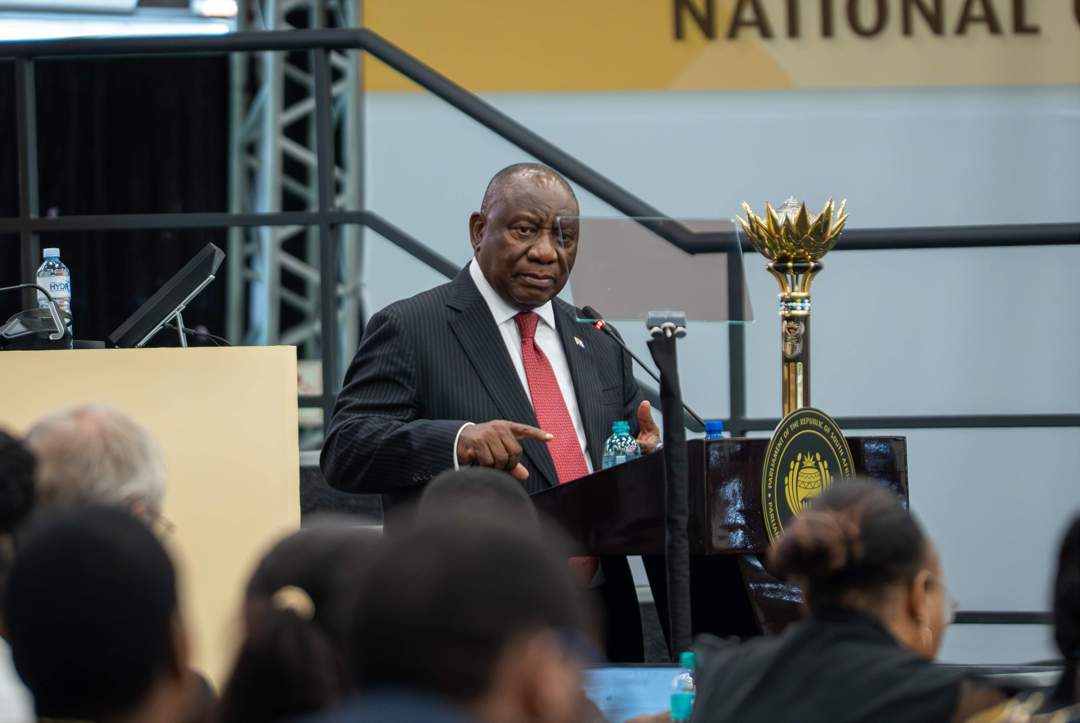
President Cyril Ramaphosa says he was made aware of suspeneded Minister Senzo Mchunu’s decision to disband the PKTT by police commissioner General Fannie Masemola,“who made it clear” he disagreed with the decision.
Storm Simpson/News24
Suspended police minister Senzo Mchunu took it upon himself to disband the Political Killings Task Team,and failed to inform President Cyril Ramaphosa.Ramaphosa told Parliament that he warned Mchunu the decision did not fall within the suspended minister’s remit.Although Ramaphosa painted a picture of a minister who failed to keep him up to speed on a highly important decision,the president has retained Mchunu on suspension.President Cyril Ramaphosa says only he could disband the inter-ministerial committee (IMC) on political killings – not suspended police minister Senzo Mchunu.
Ramaphosa made this authoritative remark in a 36-page affidavit he submitted in response to the parliamentary ad hoc committee investigating allegations made by KwaZulu-Natal police commissioner Lieutenant General Nhlanhla Mkhwanazi.
Mchunu allegedly snubbed the IMC to disband the Political Killings Task Team (PKTT),raising questions about the IMC’s continued functionality.
The ad hoc committee on police corruption sent Ramaphosa 120 written questions in February.
ADVERTISEMENT
One of the questions was whether the IMC was disbanded and who had the power to do so.
Ramaphosa added: “The IMC was never disbanded. It could only have been disbanded by my instruction,and I never gave any such instruction.”
He later said of the PKTT’s disbandment:
I do not approve of this decision.
Moreover,Ramaphosa added that he only learned of Mchunu’s view – that the PKTT operated illegally – when the minister appeared before the ad hoc committee and the Madlanga Commission into criminality,political interference,and corruption in the criminal justice system.
ADVERTISEMENT
In 2018,Ramaphosa established the IMC,which comprises the police and state security,as well as the defence,justice and correctional services ministers,to curb political killings.
MPs asked Ramaphosa whether he was satisfied with the reports he received about the PKTT before Mchunu disbanded it.
Ramaphosa said: “As at the date I was informed of the purported disbandment of the PKTT,the reports I had received of its performance and its progress in achieving its purpose were positive.
“I was not informed of the operational details of the PKTT’s work,nor would I have had any sight of such information in the normal course.
READ | Mchunu broke protocol in ordering shutdown of political killings task team – Boshielo
“This would include budgetary details or complaints against individual members of the PKTT. I refer only to reports of declines in incidents of political killings,arrests,and prosecutions of perpetrators of such killings.”
One question concerned claims by Mchunu and police commissioner General Fannie Masemola that Ramaphosa was briefed on the IMC’s dissolution.
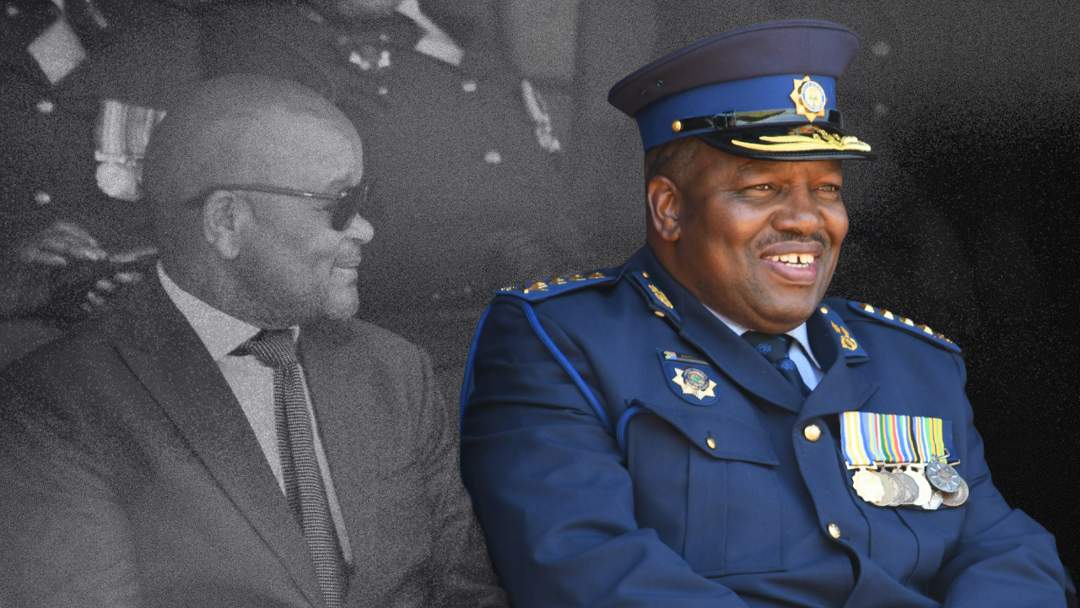
Police Minister Senzo Mchunu (left) pictured with National Police Commissioner Fannie Masemola.
Graphic: Sharlene Rood
Ramaphosa said he was made aware of Mchunu’s decision to disband the PKTT by Masemola,“who made it clear” he disagreed with the decision.
Masemola told Ramaphosa the decision would not be implemented immediately as it would affect ongoing decisions.
Later in his affidavit,Ramaphosa said he learned of the disbandment first via the media and then from Masemola.
Nonetheless,he later met with Mchunu,who also informed him of the disbandment decision.
Ramaphosa said:
I conveyed my dissatisfaction at not having been consulted prior to this decision being taken.
“I made clear my desire to be kept abreast of any further decisions that would impact the work to be done in relation to political killings.
“It was my understanding that the steps to be taken fell within the purview of the national commissioner’s authority.”
ADVERTISEMENT
Ramaphosa said he understood from Masemola that the PKTT would not be discontinued,“the directive notwithstanding”,and that he expected to be briefed,as usual,on any political killing cases,and prosecutions going forward.
Asked whether he had attempted to correct Mchunu’s view that the PKTT was an illegal operation,he stated that he avoided making “running commentary” on an issue being canvassed in an ongoing commission of inquiry.
Ramaphosa said he established the commission to have an independent and considered answer of his own,and to provide recommendations on the proper approach to these events.
“A critical question in my view is a proper interpretation of Section 206 [1] of the Constitution in stating that the minister ‘must determine national policing policy’,and section 206 [2]’s provision that this policy ‘may make provision for different policies in respect of different provinces after taking into account the policing needs and priorities of these provinces’,” he added.
READ | Ad hoc committee concludes hearings
In addition,Ramaphosa said,section 207 (2) mandated Masemola to exercise “control over” the police service in line with the national policing policy and directions of the minister.
Therefore,he added,he believed the constitutional provisions made it clear that a minister had the power to issue directions to a national commission.
But,whether or not the manner of the instruction when it came to the PKTT fell within this ambit “requires the factual inquiry and analysis I expect from the commission”.
Asked whether he had ever been warned that criminals might be targeting police officials,he stated that the Zondo Commission,and the High-Level Review Panel chaired by his national security advisor,Dr Sydney Mufamadi,“have made this plain”.
ADVERTISEMENT
Ramaphosa said the Presidency was implementing recommendations from the commissions to address those concerns of capture.
He added he was aware of investigations into the controversial suspended deputy national police commissioner,Lieutenant General Shadrack Sibiya,and parallel investigations “carried out by what is allegedly a faction in the police that is allegedly aligned to the head of SAPS Crime Intelligence,from public reports”.
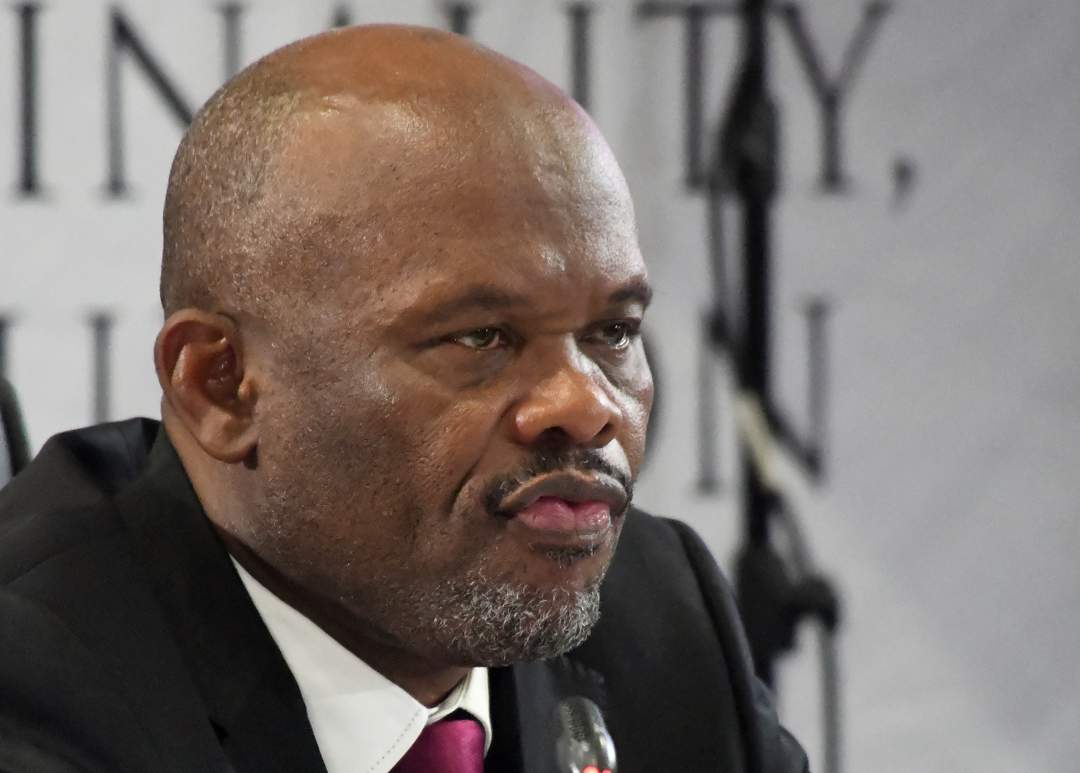
Suspended deputy national police commissioner Shadrack Sibiya.
Gallo Images/Frennie Shivambu
Ramaphosa said he was “motivated” to institute the Madlanga Commission and suspend Mchunu after receiving a briefing from his national security advisor and Mkhwanazi’s 6 July media briefing.
He added that he was “fully cognisant” of the fiscal and integrity implications when he suspended Mchunu.
READ | Mchunu’s PKTT directive created ‘institutional uncertainty’ after failing to consult
Mchunu allegedly failed to assign powers to his two deputy ministers.
Ramaphosa told MPs he was aware and that accountability on this matter was “fully traversed” in a performance assessment led by him and Deputy President Paul Mashatile.
He said: “Now that I have become aware that the minister did not allocate the deputy ministers responsibilities,it will be a matter for discussion during the assessment of the performance of the minister that the deputy president and I will be conducting with the acting police minister.”

United News - unews.co.za